Regulatory Pressure: How EU Battery Rules Are Rewriting Switch 2
On July 6, Nintendo announced via its European support page that Switch 2 will receive a modified version with removable batteries, expected to launch in Europe this fall. This isn't a proactive product upgrade—it's a reactive response to incoming EU regulations.
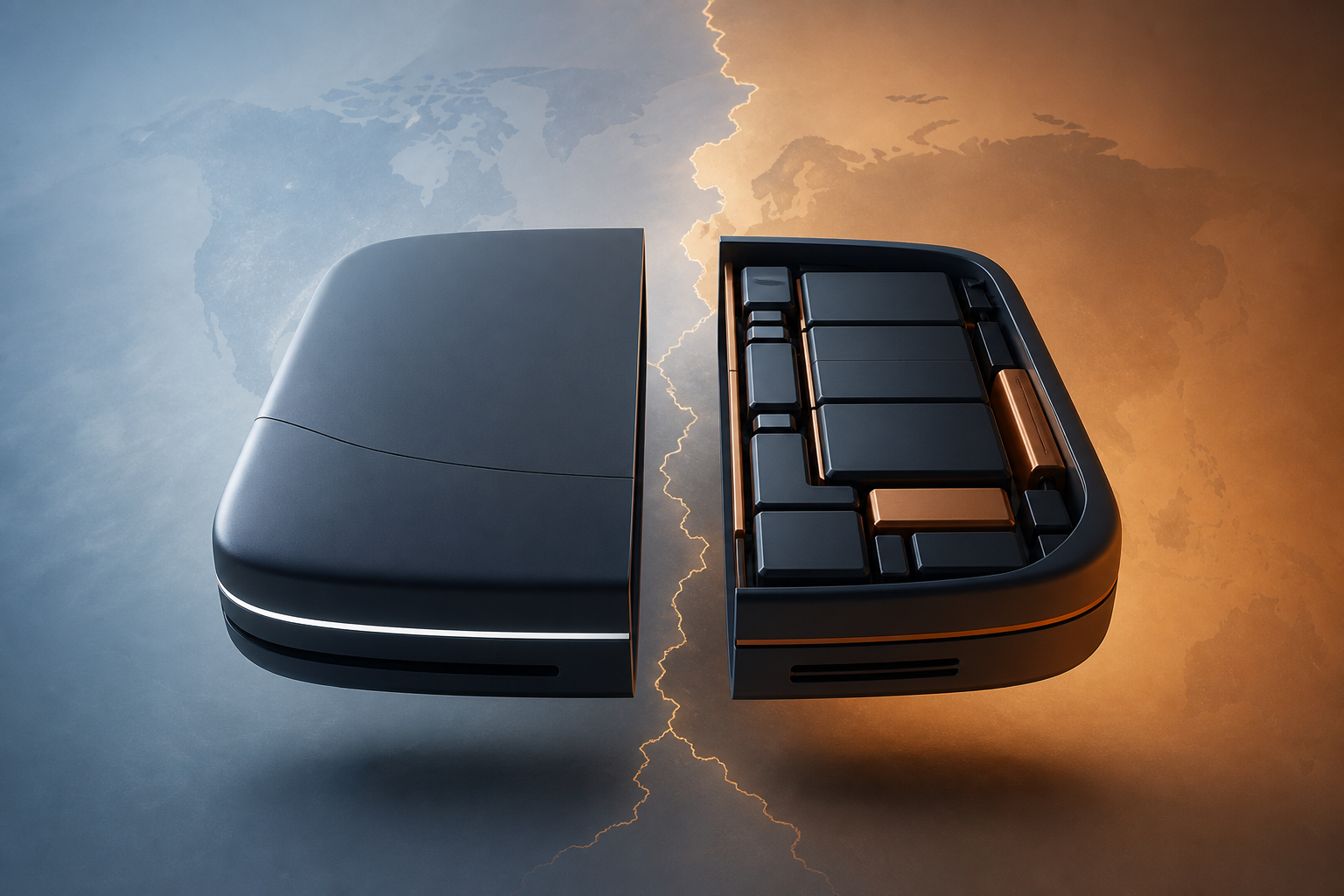
This regulation-driven hardware adjustment pushes the gaming industry toward an awkward fork in the road: the same console will come in a user-replaceable battery version for European gamers, while American and Japanese players still get the permanently sealed design. Nintendo has drawn a clear dividing line with its regional dual-track system—the modified model covers 33 countries and regions including the UK, Germany, and France, even extending to Saudi Arabia, UAE, and South Africa, but North American and Asian markets are completely excluded from these plans.
How to Identify the "EU Special Edition"
Walk into a European game retail store and consumers will quickly notice a new identifier on the packaging: OSM. This code is the recognition mark for the EU-exclusive removable battery model, corresponding to Switch 2's BEE product line. By comparison, the original Switch used the HAC designation. The appearance of the OSM mark essentially splits the same hardware into two parallel versions—one for regulated markets, one for other regions.
This segmentation isn't Nintendo's voluntary choice. The company explicitly stated in its announcement that the modification is "to comply with European battery regulations taking effect in mid-February 2027." In other words, if regulations allowed, Nintendo would prefer to maintain the original design globally.
The Price of Technical Compromise
Removable battery design isn't a free upgrade. To make room inside the chassis for a detachable structure, Nintendo made a series of trade-offs.
Battery capacity dropped from 5,220mAh to 5,172mAh, a reduction of 48mAh. While only a 1% decrease, in the portable device battery life competition, every milliamp-hour represents manufacturers' repeated deliberations. The console body gained 10 grams, from 401g to 411g; with Joy-Con 2 controllers attached, total weight increased from 534g to 548g, a 14-gram gain—a difference perceptible to players during extended handheld gaming sessions.
The Switch 2 Pro Controller adjustments are even more pronounced. To control weight under the removable battery structure, battery capacity plummeted from 1,070mAh to 897mAh, a 16% drop, though body weight decreased from 235g to 228g as a result. Nintendo plans to sell battery replacement kits in its European official store, but specific pricing and release dates remain unannounced. European players gain repair rights but must accept performance downgrades and potential additional expenses.
The Red Line Drawn by Regulation
Driving all this is EU Battery Regulation 2023/1542, officially taking effect February 18, 2027. The regulation's core requirement is crystal clear: portable batteries must be removable using "standard tools," prohibiting specialized tools, heat sources, or solvents—unless manufacturers provide these tools free with the product.
This standard seems lenient but actually draws a clear red line for hardware design. Over the past decade, consumer electronics universally adopted adhesive-fixed batteries, both compressing chassis thickness and reducing production costs. The EU's new rule directly negates this design logic, requiring manufacturers to return to removable structures.
The regulation covers headphones, laptops, e-readers, and portable gaming devices, but smartphones and tablets receive exemptions—provided the devices are designed for durability and long-lasting batteries. This exception clause leaves maneuvering room for phone manufacturers like Apple and Samsung, but leaves handheld gaming console makers with nowhere to hide.
The regulation only applies to products newly launched after 2027; already-on-sale models can continue selling. This time window directly determined Nintendo's strategic choice.
Original Switch Exits Europe
Nintendo's answer: let old products completely disappear from the European market. Switch, Switch Lite, and Switch OLED will cease sales in Europe before mid-February 2027, with production continuing until the end of 2026, and retail inventory expected to clear before regulations take effect.
This isn't technical obsolescence—it's the result of cost calculations. Retrofitting already mass-produced older models into removable battery versions requires redesigning internal structures, adjusting production lines, and increasing material costs. Nintendo chose to cut losses directly, concentrating resources on Switch 2's modified version.
European players who already purchased original Switch models needn't worry about devices becoming "orphaned." Nintendo promises eShop, online services, software updates, and accessory support will continue. But for consumers still wanting to buy the original Switch, February 2027 is the deadline.
Accessories Can't Escape Either
Battery regulation's impact extends beyond the main console. Nintendo's announced phased release plan shows nearly all battery-equipped accessories must receive modified versions:
Summer 2026 will see select color Joy-Con controllers (including neon blue/red) launch first. Fall brings the Switch 2 console. Winter initiates Joy-Con 2 and Pro controller sales. By early 2027, even N64 and GameCube replica controllers offered through Switch Online must switch to removable battery versions.
This across-the-board adjustment highlights the regulation's strict enforcement. Any product with built-in batteries sold in Europe must meet removability standards—whether console, controller, or retro peripheral, no exceptions allowed.
Valve and Other Handheld Makers' Dilemma
Nintendo isn't the only passive party. Valve's Steam Deck currently has extremely difficult battery disassembly, requiring removal of multiple screw layers and ribbon cables to access the battery module. According to EU regulations, Valve must launch a removable battery new version—despite the company having made no public statements about any upgrade plans.
ASUS ROG Ally, Lenovo Legion Go, and other handhelds must likewise adapt removable battery designs if launching new models after 2027. Regulations also require manufacturers to include battery removal/installation instructions and safety information with products, meaning product packaging, user manuals, and after-sales systems all require corresponding adjustments.
The EU has, with a single regulation, effectively redefined portable gaming device design standards. Manufacturers can choose not to enter the European market, but for any company wanting to establish presence in this 450-million-person consumer zone, compromise is the only option. Nintendo's OSM designation is the concrete mark left by this regulatory negotiation.