The Display Technology Revolution: 10,000 Nits Brightness and Wireless OLED Lead 2026 Trends
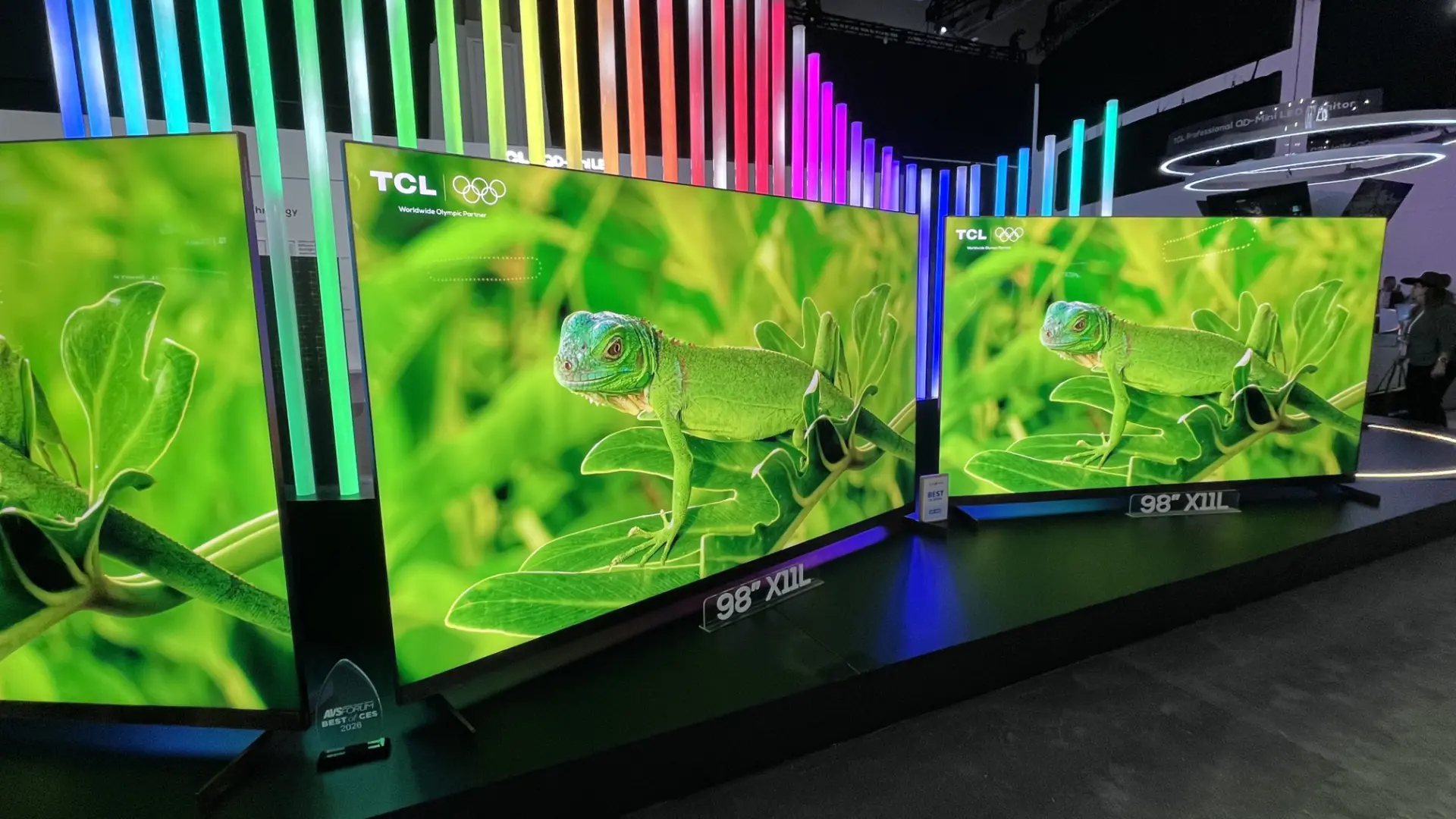
The television and display industry is undergoing an unprecedented technological revolution. From wireless OLED transmission to mind-boggling 10,000-nit brightness, from paper-thin screens to massive 163-inch display panels, 2026's display technologies are reshaping our understanding of what a "screen" can be at breakneck speed. Industry giants including TCL, Samsung, and LG are showcasing their latest technological achievements, signaling that the display market is entering an entirely new era.
Wireless OLED: A Cable-Free Future
The maturation of wireless OLED technology marks the official entry of display devices into the "wireless age." This technology enables stable transmission of 4K and even 8K signals through high-speed wireless protocols, completely eliminating the physical connection between televisions and signal sources.
For consumers, this means the freedom to position their TV anywhere without worrying about HDMI cable lengths, granting unprecedented flexibility in home layouts. More importantly, wireless transmission latency has been reduced to imperceptible levels, handling even latency-sensitive gaming scenarios flawlessly.
Industry analysts note that the proliferation of wireless OLED will transform televisions from "fixed furniture" into "mobile display terminals," opening up new possibilities for smart home ecosystems.
10,000-Nit Brightness: Redefining HDR Standards
If the leap from 1,000 to 3,000 nits in recent years was impressive, this year's emergence of 10,000-nit peak brightness has completely shattered the industry ceiling. This figure represents nearly 50 times the brightness of traditional SDR televisions and even exceeds the intensity of direct midday sunlight.
The Real-World Value of Ultra-High Brightness
The 10,000-nit brightness isn't merely a spec sheet race—it delivers a quantum leap for HDR (High Dynamic Range) content:
- Authentic highlight detail: From sun reflections to metallic sheen, bright areas in the image are no longer washed-out white, but display rich gradations and detail
- Expanded color gamut: Ultra-high brightness enables displays to cover a color space closer to human visual range
- Optimized daytime viewing: Even in brightly lit living rooms, images remain sharp and clear, unaffected by ambient light
Of course, such extreme brightness demands exceptional panel materials, thermal management, and power consumption control. Manufacturers have employed technologies like local dimming and intelligent brightness management to ensure that while peak brightness increases, overall power consumption remains within reasonable limits.
163-Inch Giant Screens: The Ultimate Home Theater
After breaking the 100-inch barrier, the industry's exploration didn't stop. This year's 163-inch displays, with diagonal measurements approaching 3.7 meters, occupy nearly an entire wall.
These giant displays utilize modular tiling technology, achieving virtually seamless image presentation through micron-level edge precision. Combined with 8K resolution, images remain crisp and detailed even on such massive screens.
The target audience for giant screens extends beyond enthusiasts seeking the ultimate experience to high-end commercial applications: art galleries, corporate showrooms, and premium conference rooms have shown intense interest in these products. As costs gradually decline, super-sized displays will likely transition from niche markets to broader application areas.
RGB Mini-LED: The Pinnacle of Backlight Technology
In the ongoing battle between OLED and LCD technology paths, Mini-LED has emerged as LCD's "secret weapon," demonstrating formidable competitiveness. The RGB Mini-LED breakthrough, in particular, has dramatically narrowed LCD's gap with OLED in contrast ratio and color performance.
Technical Principles and Advantages
While traditional LED backlights use white LEDs with color filters, RGB Mini-LED directly employs red, green, and blue LEDs as the backlight source:
- Enhanced color purity: Bypassing the color filter stage produces more pure and natural colors
- Dramatically improved efficiency: Compared to traditional backlight solutions, power consumption drops 30-40%
- Brightness and longevity advantages: Reduced load per LED enables higher brightness and longer lifespan
- Precise dimming capability: Tens of thousands of independently controlled Mini-LEDs achieve contrast ratios approaching OLED levels
TCL, a pioneer in Mini-LED technology, demonstrated RGB Mini-LED products this year that achieved professional monitor-grade performance in color accuracy, brightness, and contrast testing, validating the tremendous potential of this technological path.
Paper-Thin and Transparent Displays: Design Aesthetics Reach New Heights
As the performance race in display technology intensifies, manufacturers are also seeking breakthroughs in industrial design. "Thin" has become one of this year's keywords.
Samsung's "zero-thickness" wall-mounted TV features a screen merely 3-4mm thick, blending almost seamlessly with the wall when mounted. LG's transparent OLED panel resembles a pane of glass when off, with images appearing to materialize from thin air when powered on—a vision of futuristic technology.
These designs go beyond visual impact, representing the transformation of displays from "appliances" to "home art pieces." The application prospects for transparent display technology in retail, exhibitions, and architecture are even broader—imagine store windows that double as interactive displays, or car windshields that directly show navigation information.
Dual Evolution of Picture Quality and Energy Efficiency
While pursuing ultimate performance, manufacturers are actively addressing energy consumption challenges. New-generation display technologies commonly employ intelligent power management systems:
- Content recognition optimization: AI analyzes image content, dynamically adjusting brightness and refresh rates for different regions
- Ambient light adaptation: Automatically adjusts screen parameters based on indoor lighting conditions, saving energy while protecting eyesight
- Material innovation: New luminescent materials and backlight structures dramatically improve photoelectric conversion efficiency
Data shows that while new-generation premium displays achieve over 50% improvement in picture quality, overall device power consumption has actually decreased by approximately 20%, achieving a true win-win for performance and environmental sustainability.
Industry Outlook: The Technology Adoption Timeline
Currently, these cutting-edge technologies are mostly found in flagship products with premium price tags. However, history tells us that display technology adoption is accelerating—4K and HDR, once reserved for high-end products, have become standard features in mid-range offerings.
Industry forecasts indicate that wireless transmission technology may enter the mainstream market within 2-3 years; Mini-LED will become the dominant choice for mid-to-high-end products within two years; while 10,000-nit brightness and super-sized screens may require 3-5 years to reach ordinary consumers.
Conclusion
From spec sheets to actual experience, from technological innovation to design aesthetics, the 2026 display market exhibits unprecedented vitality. The concentrated emergence of wireless OLED, ultra-high brightness, giant screens, RGB Mini-LED, and other technologies is not only refreshing industry standards but redefining how we interact with screens.
As technology matures and costs decline, these innovations that seem astounding today will inevitably become tomorrow's everyday reality. The display technology revolution has only just begun—the future holds much promise.